
Ronchi Di Cialla - Fruilian Benchmark
If there was only one producer that you could ever taste the wines of from this zone, it would have to be Ronchi di Cialla. ERIC GUIDO
Cialla is located in the eastern reaches of Friuli Colli Orientali, yet it is quite unique from the surrounding areas, as valleys run deep between its forested higher elevations, and vineyards can be found like a patchwork strewn throughout. If there was only one producer that you could ever taste the wines of from this zone, it would have to be Ronchi di Cialla. Their winery sits atop a hill of vines, like a mirage in a desert. It was here that the now-deceased Paolo Rapuzzi and his wife, Dina, had the passion and insights to save the Schioppettino variety from near extinction... This is not just a historic winery, but also a historic family. The wines that they are producing today deserve serious consideration. ERIC GUIDO, Vinous.com
Friuli Venezia Giulia’s Schioppettino is one of the world’s most interesting and potentially great red grape varieties. Schioppettinos are especially characterized by an enticing green peppercorn note that is extremely typical and juicy, bright, mid-weight frames. Ronchi di Cialla’s Schioppettino is an iconic and historic wine in the true sense of those words, and Italy’s finest expression of the grape. IAN D'AGATA
I'm not sure where to start here. There's a lot to say about this producer.
How about this...
In the annals of Italian wines most important producers, the unique Ronchi di Cialla in Friuli's Colli Orientali, is one of the greats. The Rapuzzi family have single-handedly resurrected the indigenous Schioppettino variety. At the same time they've made it to such a high quality level that it has become their icon, their shining star and one Italy's greatest and most singular wines.
The story is not an unfamiliar one in the evolution of the modern Italian wine. Here are the highlights.
Ronchi di Cialla was born in 1970 when Paolo and Dina Rapuzzi opted for a lifestyle change away from the corporate life. Arriving at their new purchase, Paolo starts to research the wine and varieties of the area. Having read several historical texts he notices the frequent mention of Schioppettino. After asking around he realises that his area contains the only remaining stands of the variety, maybe 30 rows maximum and now only grown out of respect for the history.
At the same time he also quickly notices that the variety isn't even registered with the Department of Agriculture and should he make a monovarietal wine from it, he risks jail. Clearly it's a serious business in Italy! Undeterred, he pushes on selecting and planting 3500 vines - an illegal vineyard to make an illegal wine!
Importantly he receives what probably was the most pivotal encouragement from the Nonino family; the famous distillers had been combing the region looking for unique indigenous varieties to create their ground-breaking single-grape grappas. They champion its registration and all of a sudden Rapuzzi has a legal variety and a market. From here, the rest is history and apart from an earthquake destroying their winery in 1976 their unique bottlings spur others to plant it and Schioppettino is now regarded as one of Italy's most significant northern varieties. Only in Italy!!
What's it like? It's a bit different and the key to understanding this variety (and I'm no expert) pivots around a couple of things. It hates heat and when it's hot, it loses its telltale cracked peppercorn, rosebuds and smoke aromatic. It's thin-skinned and the skins are particular, in that they contain a molecule called rotundane. At this point I'll defer to Ian D'Agata who wrote one of the best wine articles you'll ever read about the family and variety. He writes of this pecularity, (it's) a molecule also associated with Grüner Veltliner and Vespolina that characterizes wines with a strong spicy, peppery note, a well-made Schioppettino is a thing of beauty. Despite its looks, in the right hands Schioppettino is able to weave an uncanny amount of liquid magic.
But that's not all. The "steak knives" in this story is the fact that while the Schioppettino is the thing that brings the boys to the yard, it's the other "milkshakes" in the form of a superb stable of other wines that keeps them there. This remarkable property sandwiched between valleys and forest seems to endow all the wines in the cellar with the personality of it's unique terroir.
Now in the hands of sons Ivan and Pierpaolo (as well as Dina), they have continued to build on the legacy that Schioppettino has gifted them with amazingly good results with Friuli staples like Friulano, Ribolla Gialla, Verduzzo and Picolit. For example, the Ciallabianco is a blend of the aforementioned white varieties and it's beautifully smoky, bee-wax and yellow plum and flowers is wonderful.
You'll also notice the wine below labelled as Schioppettino-RiNera. This wine is 100% Schioppettino BUT the name for the variety outside the area is sometimes known as Ribolla Nera. So the Rapuzzi's use a portion of younger vine Schioppettino for this blend indicating that portion by this other name. The other red of note (but we don't have at the moment) is the Refosco. Once again, it's one of the best examples you will find.
The Ribolla Gialla is also produced as a sweet wine. As you may know, the variety is widely loved in the region as a sweeter style. They age beautifully and impart sweetness but with a lovely savouriness that holds the characteristics of the variety still front and centre.
It has taken me some time to convince the Rapuzzi family to consider exporting the wines to Australia and those who know their reputation are very excited to have seen them on our shelves already. Schioppettino is a resurrection story Lazarus would be proud of and its unique expression is what makes wine exciting and diverse. It may not necessarily be for everyone but I love that Italy finds a place for this to exist and then champions it.
Outside of Schioppettino though there's so much to love here. The whites are beautiful and unique, in both sweet and dry guise and the other "simpler" red is lithe, perfumed and delicious.
I'd urge you to have a crack at these.
Cheers
Michael McNamara
P.S - I have a few bottles of some back vintage Schioppettino (Paolo kept 5000 bottles per year) as selected for me by Ivan. They're not cheap but they are exemplars of the ageing potential of the variety.
Cialla is located in the eastern reaches of Friuli Colli Orientali, yet it is quite unique from the surrounding areas, as valleys run deep between its forested higher elevations, and vineyards can be found like a patchwork strewn throughout. If there was only one producer that you could ever taste the wines of from this zone, it would have to be Ronchi di Cialla. Their winery sits atop a hill of vines, like a mirage in a desert. It was here that the now-deceased Paolo Rapuzzi and his wife, Dina, had the passion and insights to save the Schioppettino variety from near extinction... This is not just a historic winery, but also a historic family. The wines that they are producing today deserve serious consideration. ERIC GUIDO, Vinous.com
Friuli Venezia Giulia’s Schioppettino is one of the world’s most interesting and potentially great red grape varieties. Schioppettinos are especially characterized by an enticing green peppercorn note that is extremely typical and juicy, bright, mid-weight frames. Ronchi di Cialla’s Schioppettino is an iconic and historic wine in the true sense of those words, and Italy’s finest expression of the grape. IAN D'AGATA
I'm not sure where to start here. There's a lot to say about this producer.
How about this...
In the annals of Italian wines most important producers, the unique Ronchi di Cialla in Friuli's Colli Orientali, is one of the greats. The Rapuzzi family have single-handedly resurrected the indigenous Schioppettino variety. At the same time they've made it to such a high quality level that it has become their icon, their shining star and one Italy's greatest and most singular wines.
The story is not an unfamiliar one in the evolution of the modern Italian wine. Here are the highlights.
Ronchi di Cialla was born in 1970 when Paolo and Dina Rapuzzi opted for a lifestyle change away from the corporate life. Arriving at their new purchase, Paolo starts to research the wine and varieties of the area. Having read several historical texts he notices the frequent mention of Schioppettino. After asking around he realises that his area contains the only remaining stands of the variety, maybe 30 rows maximum and now only grown out of respect for the history.
At the same time he also quickly notices that the variety isn't even registered with the Department of Agriculture and should he make a monovarietal wine from it, he risks jail. Clearly it's a serious business in Italy! Undeterred, he pushes on selecting and planting 3500 vines - an illegal vineyard to make an illegal wine!
Importantly he receives what probably was the most pivotal encouragement from the Nonino family; the famous distillers had been combing the region looking for unique indigenous varieties to create their ground-breaking single-grape grappas. They champion its registration and all of a sudden Rapuzzi has a legal variety and a market. From here, the rest is history and apart from an earthquake destroying their winery in 1976 their unique bottlings spur others to plant it and Schioppettino is now regarded as one of Italy's most significant northern varieties. Only in Italy!!
What's it like? It's a bit different and the key to understanding this variety (and I'm no expert) pivots around a couple of things. It hates heat and when it's hot, it loses its telltale cracked peppercorn, rosebuds and smoke aromatic. It's thin-skinned and the skins are particular, in that they contain a molecule called rotundane. At this point I'll defer to Ian D'Agata who wrote one of the best wine articles you'll ever read about the family and variety. He writes of this pecularity, (it's) a molecule also associated with Grüner Veltliner and Vespolina that characterizes wines with a strong spicy, peppery note, a well-made Schioppettino is a thing of beauty. Despite its looks, in the right hands Schioppettino is able to weave an uncanny amount of liquid magic.
But that's not all. The "steak knives" in this story is the fact that while the Schioppettino is the thing that brings the boys to the yard, it's the other "milkshakes" in the form of a superb stable of other wines that keeps them there. This remarkable property sandwiched between valleys and forest seems to endow all the wines in the cellar with the personality of it's unique terroir.
Now in the hands of sons Ivan and Pierpaolo (as well as Dina), they have continued to build on the legacy that Schioppettino has gifted them with amazingly good results with Friuli staples like Friulano, Ribolla Gialla, Verduzzo and Picolit. For example, the Ciallabianco is a blend of the aforementioned white varieties and it's beautifully smoky, bee-wax and yellow plum and flowers is wonderful.
You'll also notice the wine below labelled as Schioppettino-RiNera. This wine is 100% Schioppettino BUT the name for the variety outside the area is sometimes known as Ribolla Nera. So the Rapuzzi's use a portion of younger vine Schioppettino for this blend indicating that portion by this other name. The other red of note (but we don't have at the moment) is the Refosco. Once again, it's one of the best examples you will find.
The Ribolla Gialla is also produced as a sweet wine. As you may know, the variety is widely loved in the region as a sweeter style. They age beautifully and impart sweetness but with a lovely savouriness that holds the characteristics of the variety still front and centre.
It has taken me some time to convince the Rapuzzi family to consider exporting the wines to Australia and those who know their reputation are very excited to have seen them on our shelves already. Schioppettino is a resurrection story Lazarus would be proud of and its unique expression is what makes wine exciting and diverse. It may not necessarily be for everyone but I love that Italy finds a place for this to exist and then champions it.
Outside of Schioppettino though there's so much to love here. The whites are beautiful and unique, in both sweet and dry guise and the other "simpler" red is lithe, perfumed and delicious.
I'd urge you to have a crack at these.
Cheers
Michael McNamara
P.S - I have a few bottles of some back vintage Schioppettino (Paolo kept 5000 bottles per year) as selected for me by Ivan. They're not cheap but they are exemplars of the ageing potential of the variety.
-
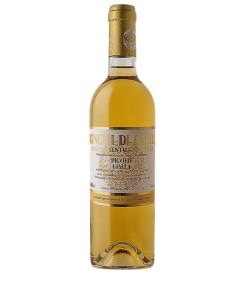 Ronchi di Cialla Picolit Cialla 2015 500mlHalf of the grapes are late-harvested at the end of October with more or less consistent development of the Noble Rot; the other half is left to dry on the vine. Spontaneous fermentation of the must in French oak barrels and subsequent maturation in the same barrels for at least 20 months. Additional 24 months of ageing in bottle. Suitable for very long ageing; particular vintages can age over 40 years. RONCHI DI CIALLA
2015Italy391$165.00 As low as $148.50