Barolo Dinner Sydney 2022
The Barolo zone is naturally divided by a geological barrier running north to south, which separates the communes of Barolo and La Morra, in the west, from Castiglione, Serralunga and Monforte, in the east. Soils on both sides of this barrier are calcareous marl of marine origin; but while those on the eastern side, referred to as "helvetian," show a significant iron content, the soils on the western side are differentiated by an elevated magnesium and manganese content, and are referred to as "tortonian." Barolos from the helvetian areas are the more robust, highly-colored and tannic, with greater body and longevity; Barolos from the tortonian areas are fragrant, graceful and elegant wines approachable earlier in their evolution.
In more recent years, the practice of most good producers is also to label their wines with the major vineyard or ‘cru’ from their area. The main ‘crus’ from the sub-zones are:
As a general comment, the nebbiolo grape of Barolo and Barbaresco is not highly pigmented, but is high in both tannin and acid. In their youth the wines can be impenetrably tough and can be difficult for a taster not accustomed to the style. In more recent years, modern vinification techniques along with increasing use of small French oak barrels are making many of the wines easier to taste when young. Aromatically, the wines exhibit distinctive smells of roses, liquorice/tar and the fruit spectrum is usually more of plum rather than cherry. The wines can age for many years and gradually become softer and richer displaying layers of complexity.
Another similarity to Burgundy is the proliferation of small growers who share the limited acreage of the zone. There are 1100 individual producers in Barolo and they share approximately 1140 hectares of classified vineyards. That’s about a hectare each! PRINCE WINE STORE
-
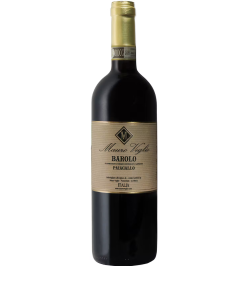 Mauro Veglio Barolo Paiagallo 2017
Mauro Veglio's property in Paiagallo is at mid-altitude in what is called Vigna San Sebastiano, bordering Terlo, to which it is closer in style than the opposite side of the MGA. Garnet in colour, it has notes of watermelon, earthy strawberry and lemon leaf. Elegance and freshness prevail over the powerful palate. Nevertheless, it is full bodied, well extracted and with sweet tannins. Citrus notes and liquorice emerge on the finish. ALDO FIORDELLI, www.decanter.com
The 2017 Barolo Paiagallo is the most open and racy of Veglio's 2017. Ripe red cherry, kirsch, dried flowers, orange peel and cinnamon all develop as the 2017 opens in the glass. This is an especially ripe, forward Barolo, but it also has a bit better balance in its tannins. ANTONIO GALLONI
In this wine you glimpse the future of the estate. The lack of smaller oak here reveals a more open profile of red fruits, florals and fruit tannins (not oak tannins) which give life and an entirely different shape to the structural profile. The tannins are saturated and enlivening. I simply love this wine and it occurs to me it's the kind of wine which is the reason you drink Barolo. MICHAEL MCNAMARA, PWS
2017NebbioloItaly457Special Price $160.00 Regular Price $190.00