
Vieux Chateau Certan - Dinner 2025
Grandfather Georges Thienpont bought Vieux Château Certan for his wife, Josephine, in the Spring of 1924. This was the second foray into Bordeaux Chateau ownership for the Flemmish wine merchant having previously bought Château Troplong Mondot in Saint Emilion in 1921.
This was the start of a Family dynasty with a focus on the right bank that is stronger today than ever before. Tonight's dinner looks at a range of wine made by the extended Thienpont Family with a special focus on the amazing 2022 vintage and the wines of Vieux Chateau Certan. As the Tienponts enter their second century of winemaking in Bordeaux there are about 40 family members of the current generation involved in the wine business. They own, manage, or make wine for châteaux including Alcée, Bouty, Chantecaille Clauzel, Clos Fontaine, Guillot Clauzel, Laclaverie, Larcis Ducasse, La Prade, L'Hêtre, L'If, Le Pin, Les Charmes Godard, Pavie Macquin, Puygueraud, Robin, and Vieux Château Certan, as well as owning other wine brands and merchant businesses. There is no joint family ownership of all these ventures, and thus no central planning. Only Vieux Château Certan-or VCC as it is familiarly known-stands as a commonly held property among the Thienponts, but even there not all Thienponts are equal owners.
Vieux Château Certan - is currently under the stewardship of Guillaume Thienpont - Emma's husband and his father Alexandre. Together they have elevated the reputation of VCC to one of the most outstanding wine estates on the right bank. Guillaume is also the winemaker at the ultra exclusive original 'garagiste' wine Le Pin, owned by his uncle Jacques.
VCC consist of a smidge over 14 hectares of vines - planted to Merlot 70%, Cabernet Franc 25% and Cabernet Sauvignon 5%
Chateau Puygueraud - Francs Côtes de Bordeaux (20 minutes drive to the west of Pomerol) has been in the Thienpont family since 1946 but the first wine was not produced until 1983 - Cyrille is Guillaume's second cousin and the current manager of the estate - The property consists of 47 hectares of vines 5 of which are white. The make up being 80% Merlot 15% Cabernet Franc and 5% Malbec. resting on clay and limestone soils and limestone with asterias, marl and clay subsoils.
Guillot Clauzel - Pomerol consists of a tiny 2.4 hectares of vines a few hundred meters from Le Pin and VCC - 83% Merlot and 17% Cabernet Franc - Guillaume has been managing the estate and making the wine since 2018.
2022 the vintage summary by Fiona Morrison -
2022 is a miraculous vintage. It was the year that the vine showed its resilience to climate change and adapted to both the heat and the drought that were present throughout the summer, to make elegant, fresh, fruity wines that often showed the best of the terroirs in which they grow. We have never seen anything like it!
To quickly sum up the weather patterns: A period of cold weather in January allowed the vines to become dormant so they could regenerate for the year ahead. As the vines began to grow, the weather turned warm and stayed so until the end of the harvest with more than 30 days during the summer months reaching over 30°C. The flowering happened quickly and evenly throughout Bordeaux. Heavy rainstorms at the end of June were a welcome respite for the parched soils although two bands of hail did considerable damage in St. Estèphe and the Haut Médoc as they diagonally crossed the Gironde estuary at the same time. The drought meant that the grapes were small and concentrated which accounted for the small yields during harvest. The drought was felt everywhere, particularly for holiday makers on the Atlantic coast where huge fires in the pine forests of the Landes destroyed over 20,000 hectares of forest.
So how come the wines are so good? Firstly, because the weather was already warm during the start of the growth period, the vines realised early on that they had to adapt to these weather conditions. They produced less foliage as there was going to be sufficient light and heat to ripen their grapes and when the veraison came, they quickly changed their efforts from vegetative growth to berry development. It may be too fanciful to say that vines have a memory which helps them to adapt to climate change, but we did indeed see that the vines knew how to adapt to this year's weather conditions.
Secondly, the grapes were in perfect health with no fungal diseases. Instead of spraying the grapes, the attention was drawn to the architecture of the vine. Growers made sure that there was a parasol effect so that the vines were shaded, especially on the west side of the vine rows and only a dappled light effect could enter the canopy. They did very little leaf stripping and then only on the east side of the vines and no green harvest. In fact, this year, vignerons tended to leave the vines to their own devices. Their confidence in them was rewarded.
Thirdly, throughout the summer and autumn, the nights were fresh, creating a large temperature difference between day and night, which many believed helped to "polish" the tannins in the skins as the grapes expanded and contracted. This also helped to keep the vines fresh and allowed them to rest overnight.
Finally, Bordeaux has learnt a great deal about viticulture in these times of climate change: Pruning techniques have changed: pruning later than in the past to avoid frost damage to the buds and spreading the vine over a double guyot to open the vine and extend its branches. Heavy ploughs are no longer used in the vineyards, as they could break up the earth around the roots. Instead, electric rakes just scratch the surface, so humidity can get underground without disturbing the soils., Mulch or cover crops are put in the vine rows, maybe doing this once every two or three rows to keep the balance right and the stress levels down, to make sure there was enough water preserved underground. The microbial life around the root system has become very important to keep the worms and the vines happy. Bordeaux vineyards today look very different from the tidy but barren parcels of a decade or so ago with their vegetation cut like a hedge to keep everything neat and tidy.
Why should you buy these wines? Most importantly 2022 is a surprisingly successful vintage with delicious, elegant, fruit and fresh wines. Bordeaux has shown that it can make extraordinary wines in a hot and dry year and that its vines are going to survive. If you want to buy a beautiful vintage in the time of climate change, that has incredible aging potential, this is it. FIONA MORRISON - Master of Wine
-
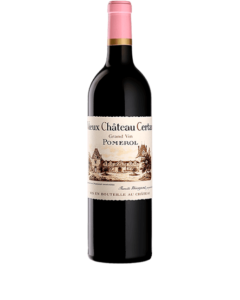 Vieux Chateau Certan 2019
Pomerol
The 2019 Vieux-Château-Certan has a fabulous bouquet with stunning delineation, a complex array of red and black fruit, sous-bois, truffle and Seville orange marmalade. The palate is medium-bodied and very precise, with fine-grain tannins, a superb bead of acidity and a peacock's tail on the finish lingering long in the mouth. I knew this was an awesome Pomerol...but maybe not this awesome! Tasted blind at the Southwold annual tasting. 99 NEAL MARTIN
The 2019 Vieux Château Certan is even better from bottle than it was from barrel. It is very clearly one of the highlights on the Right Bank. Soaring aromatics are immediately captivating. There is an exoticism in the 2019 that I saw from barrel that is evident in the bottled wine, but today, I see more balance and harmony. Crème de cassis, licorice, lavender, spice and rose petal blend into a core of red/purplish berry fruit. All the elements are so well balanced. The Grand Vin is a blend of Merlot and Cabernet Franc, but the blend also includes one lot of young vine Cabernet Sauvignon that was added for its aromatic presence. That decision paid off in spades, as the 2019 is truly magical. Antonio Galloni 98+Subtle and complex with blackberries, violets, lilacs, roses and hints of ink. So floral, yet subtle on the nose. Full-bodied with incredible polish and beauty, the silky tannins running the length of the wine and going on and on. It builds with sheer elegance and structure. A blend of 78% merlot, 15% cabernet franc and 7% cabernet sauvignon. Drink after 2028, but already a joy to taste. 99 JAMES SUCKLING
Everything contributed to the success of the vintage. A sufficiently cool and rainy winter. A fresh and sunny spring. Throughout the summer, a gradual water deficit before veraison and dry, sunny weather with cool nights enhanced the aromatic potential. Welcome light rain showers from September 22nd allowed the vines to rehydrate and complete the full grape ripeness. Harvest began September 23rd. Blend: 78 % Merlot, 15% Cabernet Franc and 7% Cabernet Sauvignon.A ripe, tannic wine with fruit character and well-preserved acidity with superb balance. The Merlot contributed density, body, smoothness, volume and breed. The Cabernet Franc showed a lacy elegance and was complex, full and long on the palate. The Cabernet Sauvignon was lively and delicious, it brought an indispensable touch of freshness to the blend. 2019 can be compared with the 2009 with its glossy colour, sweet and fresh with lots of floral notes of hawthorn and almond blossom. There is beautiful balance here. Lovely intensity, black fruit flavours, a touch of truffles, some oak and typical Pomerol generosity. A baby still but there is so much concentration and layers of flavour and great energy from the very old vines. Seems effortless but this balance is remarkable. Classic VCC. Don’t touch for at least another 10 years: 2035-2065 Splendid! FIONA MORRISON
2019Cabernet BlendsFrance356$1,195.00 As low as $1,075.50 -
 Vieux Chateau Certan 2020The 2020 Vieux Château Certan was picked from September 14 at a low yield of 30hl/ha. The nose might be even better than the 2019 with blackberry, black truffle, pencil shavings and a touch of sous-bois. The aromatics are heavenly, perhaps even more complex than the 2016. The palate is medium-bodied with a satin-textured entry and fabulous delineation. This is a Pomerol whose engine purrs like a vintage Rolls Royce. Maybe the 2019 has a touch more edginess on the finish but this is the real deal. It's a sensational, multi-dimensional Pomerol for the ages. (100) NEAL MARTIN2020Cabernet BlendsFrance356$1,085.00 As low as $976.50
 -
 Lilbert Fils Extra Brut
Name a better sound than that of a champagne cork popping from a bottle in a bustling wine bar or merry restaurant! That's why at Bellota, the Lilbert-Fils NV Blanc de Blancs Grand Cru Extra Brut was a natural choice for us to pour by the glass. Bursting with aromas of crunchy green apple, fresh citrus and white flowers matched with a lovely zippy tension on the palate and a crisp clean finish this is the go to champagne for this Holiday Season. Perfectly suited to long sunny afternoons on Bank Street paired with Moonlight Flat Oysters and a delicious morsel or two prepared by Chef Nicky. See you soon for a glass or three...or even a bottle! TIFF & ALASTAIR
Lilbert-Fils is a small, slightly under-the-radar grower in Cramant with a loyal following, and it's easy to see why. With 50% of the blend for the first wine of the house coming from a perpetual reserve of Cramant Chardonnay started in the 1990s by Bertrand Lilbert's father, this is an entry level that is anything but simple and youthful. The style is rather floral, with apricot and jasmine notes floating over a real hit of savour from the reserve and a bone dry, mineral presence. It's singular, yet harmonious; a blanc de blancs that takes care of the simple pleasures, yet hides rather a lot under the bonnet. TOM HEWSON, decanter.comThe wine delivers a refined, youthful aromatic constellation of pear, apple, limestone minerality, bread dough, white flowers and incipient smokiness in the upper register. On the palate the wine is bright, full-bodied and still quite youthful, with a fine core of fruit, very good soil signature, brisk acids, frothy mousse and a long, nascently complex and very nicely balanced finish. This is a lovely bottle of Blanc de Blancs, which could do with a year or two of cellaring to let it emerge more fully from behind its lovely girdle of acidity. Good juice. JOHN GILMAN
Hailing from the villages of Cramant (60%), Chouilly (30%) and Oiry, and based on the incisive 2021 vintage, complemented by 50% of a perpetual blend initiated in the 1980s, Lilbert's latest NV Extra Brut Grand Cru Blanc de Blancs was disgorged in May 2024 with a dosage of three grams per liter. Unfurling from the glass with aromas of crisp green apple, fresh citrus fruit and white flowers, it is medium-bodied and has a tensile personality, laden with bright acids and concluding with sapid finish. It will be even better in about three years and will offer a broad drinking window. As with all the wines in Lilbert's cellar, it is vinified in tank. KRISTAPS KARKLINSNVchardonnayFrance376$130.00 As low as $117.00 -
 Vieux Chateau Certan 2022
The 2022 Vieux Château Certan is s total stunner. Readers will find a magical wine, a Pomerol that satisfies both the intellectual and hedonistic senses. Vertical and explosive, with stunning presence, the 2022 VCC simply has it all. Time in the glass reveals myriad shades of nuance. Blue/purplish fruit, lavender, spice, menthol, licorice and plum literally soar out of the glass. The tannins are present but nearly buried by the wine's deep, layered fruit. But more than anything else, it is the balance, the total sense of harmony, that is most impressive. I simply can’t ask anything more of the 2022, hence its lofty and well-deserved rating. Bravo! (100) ANTONIO GALLONI, Vinous.com
A blend of 75% Merlot, 20% Cabernet Franc and 5% Cabernet Sauvignon (very similar to the 2019), the 2022 Vieux Château Certan is a magical wine of exemplary harmony and balance. Offering up complex aromas of dark berries and cherries mingled with notions of exotic spices, licorice, iris, violets and loamy soil, it's full-bodied, supple and seamless, its sweet structuring tannins entirely concealed by a multidimensional core of pure, vibrant fruit. This sensual, perfumed Pomerol is likely to rank alongside the 2019 and 2016 in the pantheon of recent Vieux Château Certan vintages. (97-99) WILLIAM KELLEY, Wine Advocate
2022Cabernet BlendsFrance356$1,225.00 As low as $1,102.50