
Italy is a country shaped by dramatic geography, where mountains play as big a role as coastlines in defining its wines. Nearly 40% of the country is mountainous, with the Alps dominating the north and the Apennines forming a rugged spine down the peninsula. From Alpine valleys to southern volcanic peaks, elevation is everywhere, and these high-altitude and hillside sites produce some of Italy’s most vibrant, aromatic, and refreshing wines. This pack brings together a selection of whites and reds from mountain vineyards across the country with wines defined by lift, energy, and precision.
We begin with three mountain whites. Grosjean’s Petite Arvine from the Valle d’Aosta is a variety we don't see much but really love, and this is one of the region’s benchmark producers. It’s floral and satin-textured, with alpine herbs, citrus blosso,m and a finely mineral core. Staying north, Cascina Feipu dei Massaretti’s Pigato 2023 from Liguria is a long-time PWS favourite. Closely related to Vermentino but clonally distinct, it delivers a more perfumed, elegant aromatic profile while retaining Vermentino’s firm, energetic structure. From the south, Antonio Caggiano’s Greco di Tufo 2024 comes from high-altitude vineyards at 500+ metres in Campania. Greco thrives here, offering citrus peel, pear, and stone fruit, with a subtle smoky, mineral edge that's hard not to love.
For the reds, we head to Sicily with an Etna Rosso from Terrazze dell’Etna, sourced from high-altitude terraced vineyards in Randazzo at 600 metres and above. It’s classic Etna: intense red fruit, spice, and a distinctive volcanic minerality, all carried by bright acidity. Moving north, Ronchi di Cialla’s Schioppettino RiNera is one of Italy’s most fascinating reds, from the producer that famously rescued the variety from near extinction. Expect rose petal and violet aromatics, vivid wild berry fruit, and a peppery, savoury edge. You could even try with a slight chill. We finish in Valtellina with Sandro Fay, one of our favourite mountain Nebbiolo producers. Grown on dramatic alpine terraces, these wines are Nebbiolo in a lighter, more filigreed register: lifted, aromatic and finely structured, with remarkable freshness.
This is a pack that celebrates some of Italy's most fascinating and interesting varietals shaped by its mountains' rolling hills, where perfume, freshness, and drinkability take centre stage. Perfect for warm-weather drinking, curious palates, and anyone who loves seeing Italy from a higher perspective.
Grosjean Petite Arvine 2024
The aromas of dried melon, apples, blanched almonds and honeysuckle come through clearly yet subtly. It’s medium- to full-bodied with a creamy texture and a waxy undertone, showing candied apple, sliced green melon and crushed stone at the end. Nice touch of bitterness, too. Drink now. (93) JAMES SUCKLING
Tucked up in the far north-west corner of Italy, Valle d’Aosta is the smallest region in the country. What it lacks in size, it more than makes up for in a dynamic range of varietal expressions. Surrounded by the Swiss Alps to the north and French Alps to the west, this tiny mountainous valley is one of most spectacular we have seen in Italy.
Similar to other highly mountainous areas, like Valtellina, Valle d’Aosta has soils that are made up of 20-30cm of sand sitting on primary rock of glacial origin, and they are very free draining. The climate is continental, with a massive diurnal shift.
The Petite Arvine is grown at 750 metres in Grosjean’s Rovettaz vineyard (Grosjean’s largest), which features a steep incline, but due to its wonderful southern exposure, the site enjoys a remarkably dry and windy climate. These conditions have allowed the adoption of strictly eco-compatible agronomic techniques – well above those required for organic certification. Fermentation occurs in steel with occasional batonnage to build light texture (too much lees stirring would smother the brightness of the variety). Once fermentation is complete, 30% is racked off into old barriques (very low toast) for 6–7 months,
Cascina Feipu dei Massaretti Pigato 2023
Located in the Ligurian Riviera at Albenga between the hills and the Mediterranean sea, Cascina Fèipu was founded in 1960’s when Agostino Parodi began converting his father’s (Filippo – Fèipu in dialect) orchards to grape growing. Agostino’s efforts were instrumental in establishing Ligurian Pigato as a quality wine, and soon theyhad a long list of potential clients begging for an allocation of their tiny production.
The vineyards are planted on sandy alluvial soil and enjoy striking diurnal temperature shifts thanks to the alternation between winds from the sea during the day and from the land at night. These two factors combine to provide the perfect home for Pigato to develop their full aromatic potential, giving light wines that are easy to drink but more elegant and complex.
Pigato might be genetically the same as Vermentino, but don’t say that around here! Although both vines look the same and share similar herbal and salty notes, Pigato has a wonderful purity and intensity with citrus fruit, peach, white flower,s and Mediterranean herbs. The viticulture is organic and the winemaking is all in stainless steel with regular batonnage and no malo. It’s a great partner to the local classics of trofie with pesto and spaghetti vongole.
Antonio Caggiano Fiagre 2024
Antonio Caggiano is one of the key figures behind the modern renaissance of Taurasi and Campania’s fine wine scene. Founded in the late 1980s in the village of Taurasi, the estate played a pivotal role in demonstrating the serious potential of Aglianico from Irpinia, helping to bring international attention to the region. From the outset, Caggiano combined local tradition with a more polished, contemporary approach, setting new benchmarks for quality in southern Italy.
The estate farms vineyards across some of Taurasi’s most prized zones, including sites in Taurasi, Castelfranci and Montemarano, where altitude and volcanic soils contribute to Aglianico’s natural structure and freshness. Alongside Taurasi, the range includes Fiano di Avellino, and our favourite the Greco di Tufo. Caggiano employs careful extraction and ageing in a mix of large casks and barrique, producing wines that balance power, elegance and longevity, and remain among the reference points of teh region today.
Terrazze dell’Etna Carusu Rosso 2022
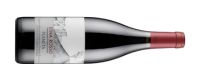
A dark profile here with tar and graphite as well as earthy, leathery tones. Light- to medium-bodied, this has a lot of sweet fruit on the palate, crisp acidity and velvety, flavored tannins. Chewy finish with aging potential, otherwise ready to drink now. JAMES SUCKLING
Palermo architect Nino Bevilacqua and his partner, Alessia, didn’t relocate quite as far as some, with so many from around Italy and further drawn by the magic of Etna. Over a decade later, these adoptive ‘Etneans’ have devoted themselves to the renovation, replanting and refurbishment of the old vines and their terraces.
Plots were bought in diverse parcels and drawn together in their beautiful amphitheatre-like estate in the premier commune of Randazzo. They have created a remarkable property, acknowledged in equal measure for the look and style of the estate as for the regional authenticity of the wines. Two key ingredients for Terrazze dell’Etna are the lean volcanic soils in their Contrada, Bocca d’Orzo, and, equally, the altitude of the vineyards, which lie within Randazzo between 650 and 950 metres – some of the highest in the region.
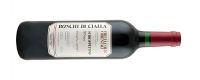
Ronchi di Cialla Schioppettino- RiNera DOC 2022
This is not just a historic winery, but also a historic family. The wines that they are producing today deserve serious consideration.
The 2022 Schioppettino RiNera wafts up with a gorgeous bouquet of dusty rose petals, violets, blackberries and a white pepper tinge. It is lifted and finessed with crisp wild berry fruits and mineral tones that come across as vividly pure, as juicy acidity enlivens the experience. A slight sour citrus twang forces the mouth to water as it finishes with excellent length, yet fresh. Lovely at room temperature but also at cellar temperature. ERIC GUIDO, Vinous
Ronchi di Cialla’s Schioppettino is an iconic and historic wine in the true sense of those words, and Italy’s finest expression of the grape. IAN D'AGATA
Much of the estate's fame stems from the revival of the grape schioppetino. A once-revered grape native to the region, but at the time almost completely extinct. Paolo (now deceased) is almost single-handedly responsible for its revival. The Rapuzzi’s vines are still considered the benchmark. Production levels are much lower than those defined by the Ministry of Agricultural Resources and there has been significant work in the vineyards and terraces to continually maintain the historic site.
Sandro Fay Valtellina Superiore 'Valgella' 2022
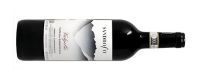
A super-fresh wine with strawberry, red currant, violet and mint aromas. Light-bodied. It shows freshness, lightness, crunchy tannins and a polished finish. Drink now. JAMES SUCKLING
Very much a small, family-run affair, Sandro Fay began producing wines commercially in 1973. In more recent times, son Marco has assumed responsibility for the winemaking side of the business, while daughter Elena manages sales and marketing. All the fruit comes from the family’s own vineyards. The winery is situated in the Valgella district, the most easterly of the Superiore zones. Here, removed from the subtle moderating effect of Lake Como at the western edge of the region, it’s challenging, borderline viticulture. The vineyards sit on rock with a little sand. Although blessed with perfect drainage, the vines can “do it tough”, to quote Marco Fay.