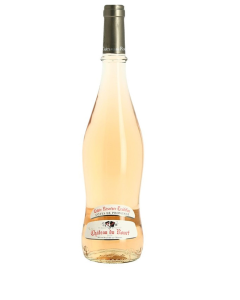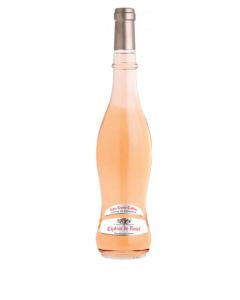
Chateau du Rouet
The Château du Rouët is situated, at the foot of the red rock mountains, nearby the Roman town of Fréjus. Once a Templière farm, the Château is now settled at the foot of the Rouët mountain range, a volcanic bar of red ochre, at an altitude of 560 metres with five generations of rich history inter-twined though this impressive estate.
Before the revolution, the small chateau was a hunting ground for royals of the courts who had the wine growers of Trans en Provence plant part of the property to vines and olive trees with some of the production sent to Versailles by the canal transport of the Rhône.
Around 1840 the Lagane & Savatier family bought the property. Mainly forest at the time, it was earning its incomes by the sale of the wood of pines and the harvest of cork. It wasn’t till after the second world war that Rene Savatier and Victor Trocell, manager of the estate at the time, shifted focus to bottling wines under the Chateau du Rouet label.
Since 1962, Bernard Savatier has dedicated his career to managing the estate for the family with his sons Martin and Matthieu joining him most recently. Martin has been largely responsible for modernising the estate and his dedication to the terrior of the region contributed largely to the creation of the Frejus appelation.
The vines, set between the Gorges de Pennafort and The Gorges du Blavet, are spread out over 70 hectares of preserved area, classed as Natura 2000. After a fire in 1927 that ravaged the Estérel from Mandelieu to La Motte the vines were planted in fire trenches while peach trees surround the property for protection. Oriented towards the South and they benefit from the Mistral as well as the breeze from the seaside which maintain freshness and acidity from the otherwise warm Mediterranean climate.
The soils, formed by ancient movements across the Rouet Massif eons ago, left a patchwork of shallow sandy soils, sandstone, deeper soils with limestone, yellow clay as well as rocky granite and the red sandstone which is the archetype of the "Terroir de Fréjus" that Martin helped establish.
Around 60% Grenache with 30% Cinsault and a touch of the traditional Tibourenc grape the harvests are done at night to maintain freshness and the light maceration’s performed in temperature controlled tanks to help maintain a wonderful lift to the wines. This result in a complex Rose that skirts the line beautifully between the richer Rose’s of Bandol but with the more delicate hand of Provence.
Before the revolution, the small chateau was a hunting ground for royals of the courts who had the wine growers of Trans en Provence plant part of the property to vines and olive trees with some of the production sent to Versailles by the canal transport of the Rhône.
Around 1840 the Lagane & Savatier family bought the property. Mainly forest at the time, it was earning its incomes by the sale of the wood of pines and the harvest of cork. It wasn’t till after the second world war that Rene Savatier and Victor Trocell, manager of the estate at the time, shifted focus to bottling wines under the Chateau du Rouet label.
Since 1962, Bernard Savatier has dedicated his career to managing the estate for the family with his sons Martin and Matthieu joining him most recently. Martin has been largely responsible for modernising the estate and his dedication to the terrior of the region contributed largely to the creation of the Frejus appelation.
The vines, set between the Gorges de Pennafort and The Gorges du Blavet, are spread out over 70 hectares of preserved area, classed as Natura 2000. After a fire in 1927 that ravaged the Estérel from Mandelieu to La Motte the vines were planted in fire trenches while peach trees surround the property for protection. Oriented towards the South and they benefit from the Mistral as well as the breeze from the seaside which maintain freshness and acidity from the otherwise warm Mediterranean climate.
The soils, formed by ancient movements across the Rouet Massif eons ago, left a patchwork of shallow sandy soils, sandstone, deeper soils with limestone, yellow clay as well as rocky granite and the red sandstone which is the archetype of the "Terroir de Fréjus" that Martin helped establish.
Around 60% Grenache with 30% Cinsault and a touch of the traditional Tibourenc grape the harvests are done at night to maintain freshness and the light maceration’s performed in temperature controlled tanks to help maintain a wonderful lift to the wines. This result in a complex Rose that skirts the line beautifully between the richer Rose’s of Bandol but with the more delicate hand of Provence.